
Djanogly Strelley
Academy
Curriculum
History
Our History Lead is Mrs Stevens
Our Big Idea
At our school, we believe that history is far more than dates and facts — it’s the story of real people, big adventures, brave decisions, and amazing discoveries. Our Big Idea for Primary History is simple:
History helps us understand how the world came to be, and how we can shape its future.
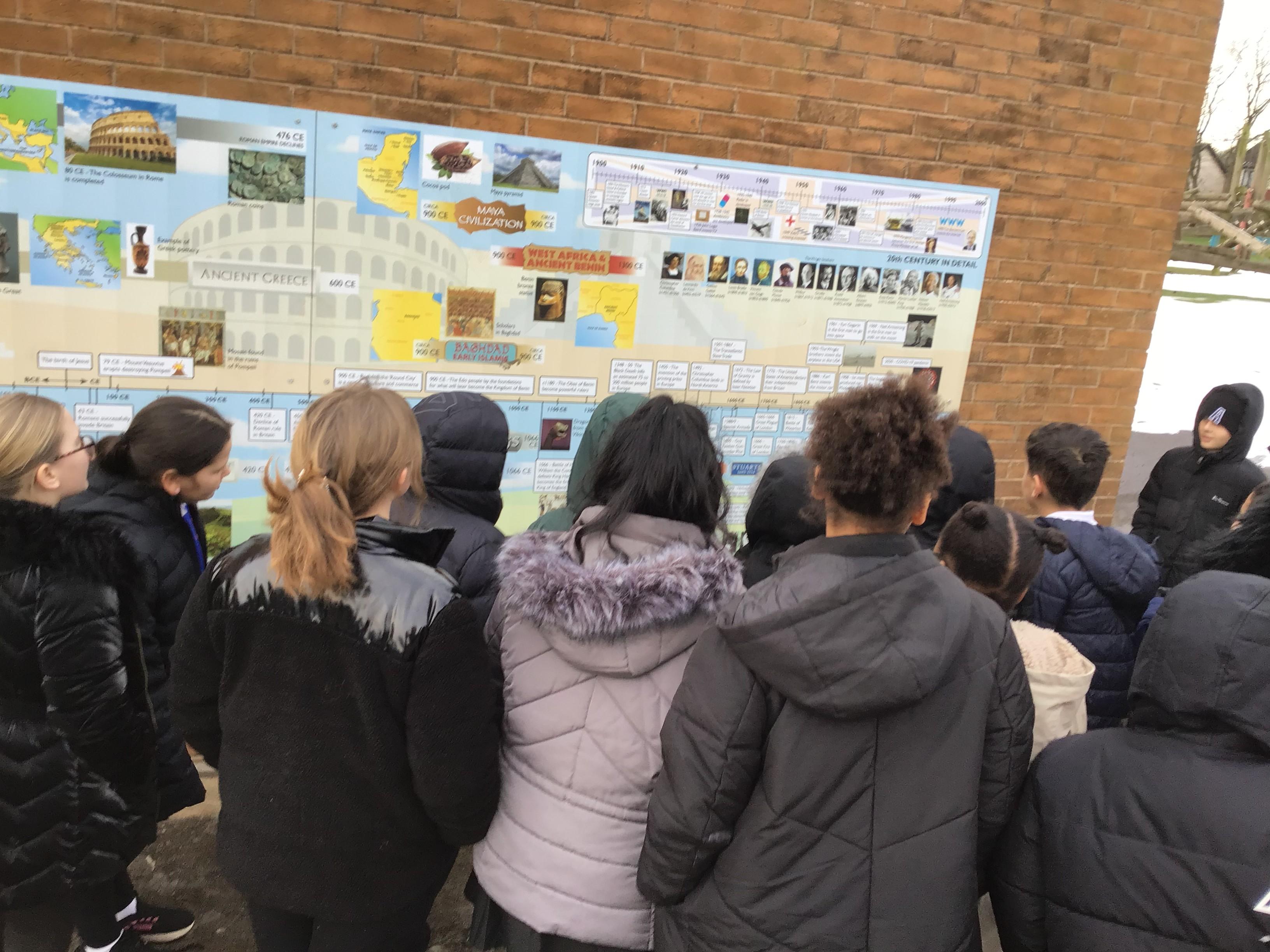
Through exciting topics, hands‑on learning, and thoughtful discussions, we encourage children to explore the lives, identities and communities of people in the past, pupils understand how diverse experiences share society and how change over time influences the world we live in today. We want our pupils to become curious investigators of the past. We want them to ask questions, explore evidence, and make connections between different periods of time.
Our Approach
At DSA, we shape our history curriculum to ensure it is fully inclusive and accessible to every child. Our aim is to fulfil the requirements of the National Curriculum for History by providing a broad, balanced and carefully curated curriculum that weaves British Values throughout. We ensure the progressive development of historical concepts, knowledge and skills, and give children meaningful opportunities to study life in the past.
We strive to deliver a high-quality history curriculum that inspires curiosity and fascination about Britain’s past and the wider world.
History at DSA is rooted in real people, real places and real events. It explores sequence, time and chronology, and develops children’s understanding of evidence from the past. Pupils learn how past events and societies influence our lives today, what different civilisations were like, how they were governed, and what beliefs and cultures shaped people’s actions. Through this, children build a coherent chronological framework of significant events, periods and individuals.
Children are encouraged to research independently, evaluate evidence critically, and debate their ideas thoughtfully—skills that are valued in further education, employment and adult life.
Our Curriculum
Our teaching equips pupils with knowledge about:
- the history of Britain and how it has both shaped and been shaped by the wider world
- significant aspects of world history, including ancient civilisations and empires
- changes within and beyond living memory
- the lives and contributions of significant individuals
- methods of historical enquiry, enabling them to ask perceptive questions and construct informed responses
We want children to enjoy and love learning about history, gaining knowledge and skills not only through classroom learning but also through fieldwork, workshops and educational visits that bring the past to life.
At DSA, our curriculum is underpinned by five strands of disciplinary knowledge:
chronology, significance, source enquiry, cause and consequence, and change and continuity.
|
Autumn |
Spring |
Summer |
|
|---|---|---|---|
|
F1 |
Responding to children’s interests and needs through continuous provision and enhancements |
||
|
F2 |
Celebrations around the world and their history |
Who was the first man on the moon? |
Fairy Tales – what is a traditional tale? Dinosaurs |
|
1/2 Cycle B |
Significant people |
Robin Hood and Nottingham |
|
|
1/2 Cycle A |
Toy Time Travellers (within living memory) |
School Days (beyond living memory) |
|
|
3/4 Cycle B |
Egyptians |
Greeks |
|
|
3/4 Cycle A |
Stone Age to Iron Age |
Romans |
|
|
Year 5 2025-26 only |
Local History – including mining – |
Greeks |
|
|
Year 5/6 Cycle B from 2026 |
Local History – including mining – |
Anglo Saxons, Scots and Vikings |
|
|
Year 5/6 Cycle A from 2027 |
Medicine Across the ages |
Benin and Maafa |
|
Supporting Learning at Home
Children can further develop their knowledge and skills in History, by visiting the following websites:
Primary History teaching resources
There are also many great historical resources in and around Nottingham including the National Justice Museum, Nottingham Castle and Green's Mill.
 Visit our Trust website
Our Family of Schools
-

Castle View Primary School
-

Chellaston Academy
-

City of Derby Academy
-

Djanogly City Academy
-

Djanogly Northgate Academy
-

Djanogly Sherwood Academy
-

Djanogly Strelley Academy
-

Kensington Junior Academy
-

Hilltop Primary Academy and Nursery
-

Laceyfields Academy
-

Langley Mill Academy
-

Morton Primary Academy
-

QEGS Ashbourne
-

Springfield Academy
-

Springfield Junior School